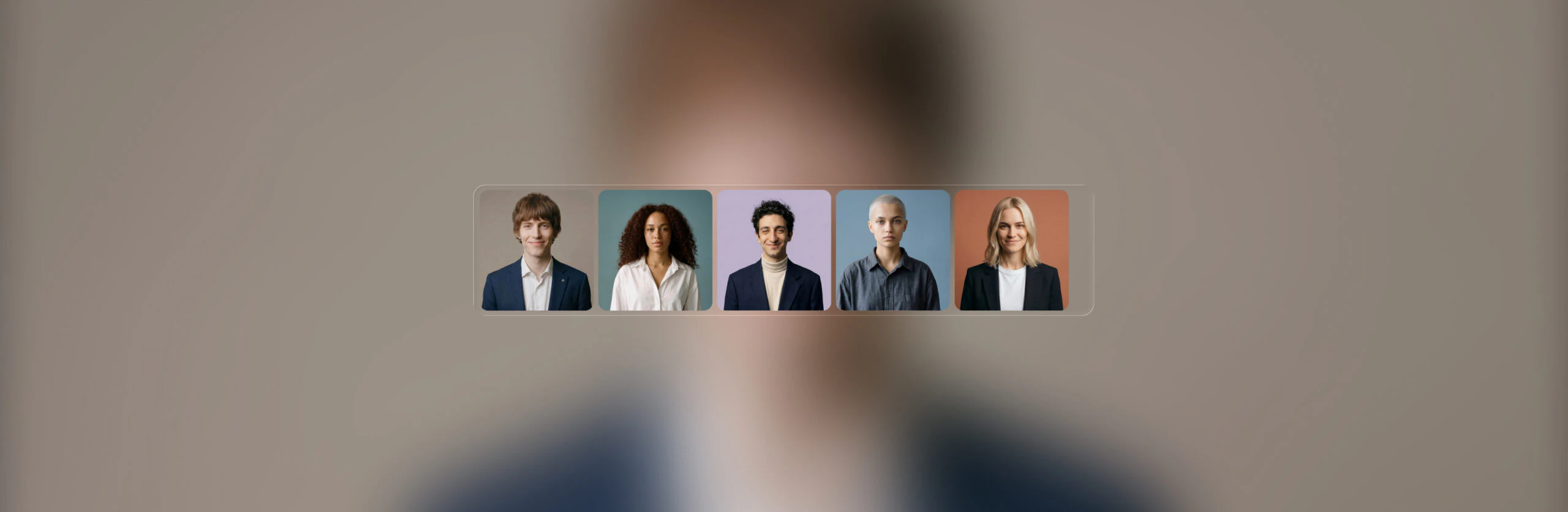
Why choosing the best AI avatar generators matters to video creators

Highlights
Whether you're producing training videos, marketing content, or social media clips, AI avatars have changed what's possible with a small team and a tight budget. Instead of booking a studio or hiring a presenter, you can generate a photorealistic on-screen host from a text script in minutes.
The demand is growing fast. Brands are using AI avatars for product explainers, HR onboarding, and digital marketing campaigns. Educators are building scalable course content. Agencies are turning around localized video in dozens of languages without the need for reshoots. Not every platform delivers the same results, and navigating your way to the right platform can be challenging.
Below, we break down the best AI avatar generator platforms available right now, what sets each one apart, and how to choose the right fit for your workflow.
Why use AI avatar tools
AI avatars are digital presenters, generated from real footage or built from scratch, that can speak any script you give them. For a deeper look at what they are and what you can do with them, check out this guide to AI avatars. What makes a good AI avatar platform goes beyond how realistic the avatar looks. The best options combine several key technologies:
Lip-sync accuracy
A mouth that doesn't match the words will lose your viewer before the first sentence finishes? Poor lip-sync is one of the quickest ways to break a viewer's trust, and the gap between platforms is more noticeable than you'd expect.
Motion modeling
If the head doesn't move like a real person's, your audience will notice it immediately. The best platforms model how a real person moves during speech, and that's what keeps a viewer watching rather than clocking out.
Facial expressions
Even with perfect lip-sync and natural motion, a flat face makes the whole thing feel off, even when the lip-sync is good, and it's usually the thing viewers notice first.
Voice and multilingual support
This gives you the ability to generate or clone voices and deliver content in multiple languages. For teams producing across markets, this removes the need to re-record or hire voice talent for each language.
For creators and businesses, that combination changes what's possible without a crew. You can produce company onboarding videos without scheduling a shoot, create product explainer videos in 10 languages from a single script, or build a consistent brand voice without a presenter on retainer.
What to look for in an AI avatar platform
The right platform will always come down to what you're making and who it's for, so here's what to weigh up before making a decision.
What you're making
Social content, corporate training, and product ads need different things from a platform, so start here before you look at anything else. A tool built for enterprise onboarding won't necessarily give you the quick, punchy output that short-form social demands.
Realism
Motion quality and lip-sync accuracy vary more than you'd expect, and a bad result is hard to ignore once you've seen it. For client-facing or public-facing content, this is the one to test first with a free trial before you commit.
Personalization
A stock avatar is fine for a lot of work, but if you want your own face on screen, not every platform offers that. Some require a short video recording, others use a single photo, and the quality of the output varies between them.
Voice and multilingual support
If you're producing content across markets, voice cloning and language range can make a big dent in your budget and turnaround time. Reshooting or re-recording for each language is the old way of doing it, and most of the platforms on this list remove that problem entirely.
Price
Some platforms are free to start, others charge by the minute, and it adds up fast at volume. For creators used to Artlist's unlimited model, per-minute pricing requires a different way of thinking about production budgets entirely. Factor in how much video you're realistically producing per month before you pick a plan.
Ease of use
Some platforms take an afternoon to learn, others assume you already know your way around an edit suite. If you're handing this off to someone on your team, that gap matters more than any feature list. For Artlist creators, the workflow already spans music licensing, footage sourcing, and AI-generated assets. An avatar platform that adds friction rather than removes it will slow down production, not speed it up.
Best AI avatar platforms
These are the platforms leading the market right now. Each one does things a little differently, and the gap between them is bigger than it looks on a features page. A tool built for enterprise onboarding won't give you the quick, punchy output that short-form social demands. The breakdowns below should make it easy to find the right fit for you.
HeyGen
HeyGen AI is one of the most widely used avatar platforms, known for its realistic avatars and strong lip-sync performance. You can create a custom avatar from a short clip of yourself. It supports over 40 languages, includes a voice cloning feature, and is a strong pick for marketing agencies, e-commerce teams, and anyone producing high-volume video content. The interface is clean and the output quality is consistently high.
Creatify Aurora
Creatify Aurora is designed for creating highly realistic AI avatar videos with minimal setup. It focuses on turning scripts into polished presenter-led content quickly, with natural facial expressions, smooth lip sync, and cinematic-looking avatars that feel more human than traditional AI presenters.
The platform is especially strong for marketing videos, ads, and social-first content where realism and speed matter equally. Aurora’s avatars are built to deliver expressive performances that work well for product promotions, UGC-style videos, and brand storytelling without requiring cameras, actors, or production crews.
OmniHuman
OmniHuman takes AI avatar generation in a more advanced and research-driven direction, focusing on full-body human animation from minimal input. It can generate highly realistic human motion, gestures, and facial performance from a single image and audio source, making the results feel far more dynamic than standard talking-head avatars.
Its strength lies in realism and motion quality, especially for creators experimenting with cinematic AI video, virtual characters, and next-generation digital humans. While it’s not as workflow-oriented as enterprise avatar platforms, OmniHuman showcases some of the most impressive human animation capabilities currently emerging in AI video generation.
Fabric 1.0
Fabric 1.0 is developed by VEED and takes a different approach to the others on this list. Instead of generating a full digital presenter from scratch, it works as an audio-driven engine. Feed it a static portrait and a vocal track, and it animates the face to match the speech with strong phonetic accuracy.
The lip-sync quality is among the best for talking-head formats, and it handles non-human subjects (animals, illustrated characters, abstract designs) better than most platforms. It supports up to 60 seconds of output at up to 720p.
The trade-offs are real: no camera movement, no body animation, single speaker only, and no text-to-speech input, so you need a pre-recorded audio track before you can generate anything.
Synthesia
Synthesia is the go-to platform for corporate and enterprise use. It's built for training videos, onboarding, and internal communications, with a straightforward script-based editor that doesn't require any video editing experience.
There’s over 230 avatars and support for 140+ languages, so it's one of the most scalable options on the market. If you're producing company onboarding videos or educational content at volume, Synthesia is one of the most reliable tools available.
Deepbrain AI
Deepbrain AI focuses on ultra-realistic avatar generation with fast turnaround times. Its AI Studios product lets you create presenter-led videos from a script in minutes, with a strong emphasis on photorealism. Its newer virtual clone feature takes that further: just record a short video of yourself, and Deepbrain generates a fully animated digital twin you can script and redeploy across any project without stepping in front of a camera again.
It's well-suited to news-style content, product explainers, and enterprise video. Avatar quality is among the best in the market, though the pricing reflects that.
CapCut
CapCut is already a popular short-form editor, and has added AI avatar functionality that makes it a strong option for social media creators. It's more accessible than dedicated avatar platforms, and its integration with existing editing tools makes the whole workflow smooth.
If you're creating AI avatar content for TikTok, Instagram Reels, or YouTube Shorts, CapCut is worth serious consideration. It's also significantly more affordable than enterprise-focused alternatives.
Veed.io
Veed.io offers AI avatars as part of a broader video creation suite. It's browser-based, beginner-friendly, and includes tools for subtitles, screen recording, and video editing alongside the avatar feature. Overall, it's a solid all-rounder for smaller teams and independent creators who want avatar functionality without committing to a specialist platform. While the Avatar quality is good, it's by no means at the very top end of the market.
Colossyan
Colossyan is built with learning and development teams in mind. It includes features like scene branching for interactive video, making it a strong pick for e-learning and corporate training use cases. Avatar quality is high, and the platform supports multiple languages with natural-sounding voices. It's more niche than HeyGen or Synthesia, but for training-specific content it's one of the best options available.
D-ID
D-ID specializes in animating still images, upload a photo and it generates a speaking, moving avatar from it. Animating a still photo into a talking presenter is a different approach to everyone else on this list, and it works well for personalized video messages or bringing fictional characters to life. It also integrates with ChatGPT, so it is a very useful tool for creators building conversational AI experiences. For a look at where avatar technology meets with virtual influencers, D-ID is worth exploring.
AI Avatars platform comparison
Platform | Best For | Custom Avatar | Key Features | Limitations | Artlist's Toolkit |
HeyGen | Marketing, e-commerce, agencies | Yes | Custom avatar from video clip, | Pricing climbs past the starter plan, custom avatar approval takes time, output style is fairly fixed with limited control over framing or presentation | |
Creatify Aurora | Ad campaigns, UGC, expressive content | Yes | Audio lip-sync, text-directed expressions, handles singing and rhythmic delivery, 60-second output | Static camera and body, max 720p, single speaker | |
Omnihuman | Cinematic presentations, full-body animation | Yes | Continuous camera movement, dynamic gestures, 1080p output | 30-second duration limit, single speaker | |
Fabric 1.0 | Talking heads, UGC, non-human animation | Yes | Phonetic lip-sync, animates non-human faces, 60-second | Static body and camera, max 720p, single speaker, requires pre-recorded | |
Synthesia | Corporate training, onboarding | Yes | 230+ avatars, 140+ languages, | Avatars lack presence, limited creative flexibility, expensive for smaller teams | Not available |
Deepbrain AI | News, enterprise, photorealism | Yes | Ultra-realistic photorealism, fast turnaround | Fewer integrations and a smaller avatar library than rivals at a similar price point | Not available |
CapCut (Pro) | Short-form social content | Yes | Built-in short-form editing, affordable, optimised for TikTok/Reels | Lower realism than specialist platforms, limited enterprise features, not built for long-form or high-volume output | Not available |
D-ID | Headshot animation, personalized video | Yes | Animates still photos, ChatGPT integration, good for personalised/ character-based video | Output quality depends on source photo, not suited to high-volume presenter video | Not available |
Find the avatar models that fits your projects
The best AI avatar generator for you depends on what you're making and who it’s for. HeyGen and Synthesia lead for professional and enterprise output. CapCut and Veed.io are strong for social-first creators. Colossyan is the pick for L&D teams. Deepbrain AI and D-ID cover more specialist needs.
If you want direct access to some of the strongest models on the market, Artlist’s AI Toolkit includes four of them:
- HeyGen for high-fidelity presenter video and custom digital twins
- Fabric 1.0 for precise talking-head lip-sync and non-human animation
- OmniHuman v1.5 for cinematic full-body results with camera movement
- Creatify Aurora for expressive, ad-ready content including singing and text-directed performances.
All four sit alongside Artlist’s AI music, voice generators, and stock tools such as footage, sound effects and royalty-free music, so your whole production workflow stays in one place.