Is the new face of social media...faceless?

Highlights
Introduction
Pop over to Instagram and look at #facelessmarketing. At the time of writing — April 2026 — the hashtag has grown to more than 5.8 million reels, signaling just how quickly faceless content has moved from a niche trend to a mainstream strategy. Faceless marketing has evolved into a major content movement, fueled by creators, brands, and AI-powered tools.
We’re talking about content that’s produced without putting an identifiable human person front and center. Traditionally, that might have meant anonymous meme accounts, how-to videos, or voiceovers without a face attached. But today, faceless content is expanding far beyond anonymity alone. AI voice generators, AI images, AI video tools, and digital avatars are reshaping what faceless creation can look like.
It’s a sharp contrast to influencer-led marketing, where personality is often the product. So why are so many creators and brands embracing content that removes the creator from the spotlight — or replaces them entirely with AI? Let’s take a closer look at what faceless marketing is, why it’s growing so fast, and how modern tools are transforming it into one of social media’s most adaptable content strategies.
What sparked the faceless marketing trend?
Faceless content isn’t actually new. Think back to all of the ads you’ve seen in your life, whether on billboards, TV, or the radio, and many of them will have been product-driven. You wouldn’t recognize the voice on the radio, there wouldn’t be a famous face in the footage, and the ad on the bus stop showed just the product.
This is, however, in contrast to how social media marketing has traditionally worked. For years, it has relied heavily on personal branding. Creators build relatable online identities and brands, partnering with influencers to reach their audiences. But as privacy concerns and AI-powered content tools grew, faceless content evolved from a niche approach into a much broader strategy.
Faceless content can be of any genre, like a cooking demonstration in a busy kitchen where the cook’s hands are visible, but otherwise it’s an anonymous voice-over, just like Kazan. It can be funny memes designed to capture the moment or indulge in nostalgia, like @loveofhuns. It can be cartoon commentary and constructive tips and advice on a particular field, for example, @cheapomedia’s look at the filmmaking world. It could also be a regular series of how-to content from a specific industry, like @reputeforge for branding and marketing advice.
Increasingly, creators are also using AI avatars, such as Imma, generating huge numbers of followers. They’re using AI-generated visuals and voices to create successful Youtube channels. The Sleepless Historian, for example, is a popular YouTube channel that produces long-form, AI-generated "boring history" videos designed for sleep, relaxation, or meditation. It’s got almost 700.000 subscribers. UK Crime Stories uses AI images and and AI voiceover narration and has reached more than 90.000 subscribers. The makers of these videos are creating recognizable content without ever putting themselves front and center.
It’s appealing because it helps separate the creators’ personal and professional lives, while often allowing for more privacy, flexibility, and creative freedom. Above all, the focus stays on the content itself rather than the person behind it. In a social landscape once dominated by personality-driven branding, that can feel refreshingly different.
Benefits for creators
The idea of staying anonymous — or perhaps partially anonymous if you choose to share your first name or vague geographical location — might seem contrary to the idea of building a brand, but it has some significant advantages as a creator.
Privacy
Not everyone wants to be famous or in the spotlight, even within a niche market. By creating faceless content, you’re able to separate your private life from your work as a creator. Your content won’t be scrutinized on a personal level, and there’s less pressure to comment on every current event, opinion, or controversy unless you choose to.
Less stress
Even if you don’t mind some attention, the pressure to present yourself as consistently perfect – from appearance to opinions – can be exhausting. Building content without tying it directly to your identity can remove some of that pressure, helping reduce burnout and allowing you to focus more on creating.
Focus on content
When your identity isn’t the main attraction, the spotlight stays on the content itself. Without constant attention on your personal life, appearance, or personality, your audience is more likely to focus on the value, entertainment, or information you’re providing. Your message stays front and center.
Benefits for brands
The benefits of creating and using faceless content extend beyond creators alone. For brands, it can offer more control, lower risk, and greater flexibility.
No PR liability
Faceless content reduces the risks that can come with tying your brand to a public personality. There’s no influencer scandal, off-brand controversy, or public mismatch to navigate. Instead of relying on someone else’s reputation, brands keep the focus on their own messaging.
The focus is on the product
When there’s no celebrity or influencer at the center, the product itself takes the spotlight. This can strengthen brand identity by making campaigns more about what you’re selling than who’s selling it. Over time, that can help audiences remember the brand itself, not just the face attached to it.
More cost-effective
Big-name influencers can be expensive, and their rates often reflect reach more than results. Faceless marketing can offer a more budget-friendly alternative, especially when brands use AI voices, stock assets, templates, or digital avatars to produce content at scale without repeated talent costs.
Content stays fresh
Faceless campaigns often have a longer shelf life because they aren’t tied as closely to one personality, trend cycle, or public image. Or they’re connected to an AI avatar personality that will never complain, be sick or move on. This makes it easier to repurpose content, maintain consistency, and adapt campaigns across different markets without relying on region-specific celebrity appeal.
Scalability
Faceless marketing is built for scale. Multiple creators, editors, or teams can produce content simultaneously while following the same visual style, messaging, or digital persona. Whether that’s through templates, AI avatars, or branded content systems, faceless campaigns make it easier to grow output without losing consistency.
Using the technology and tools available
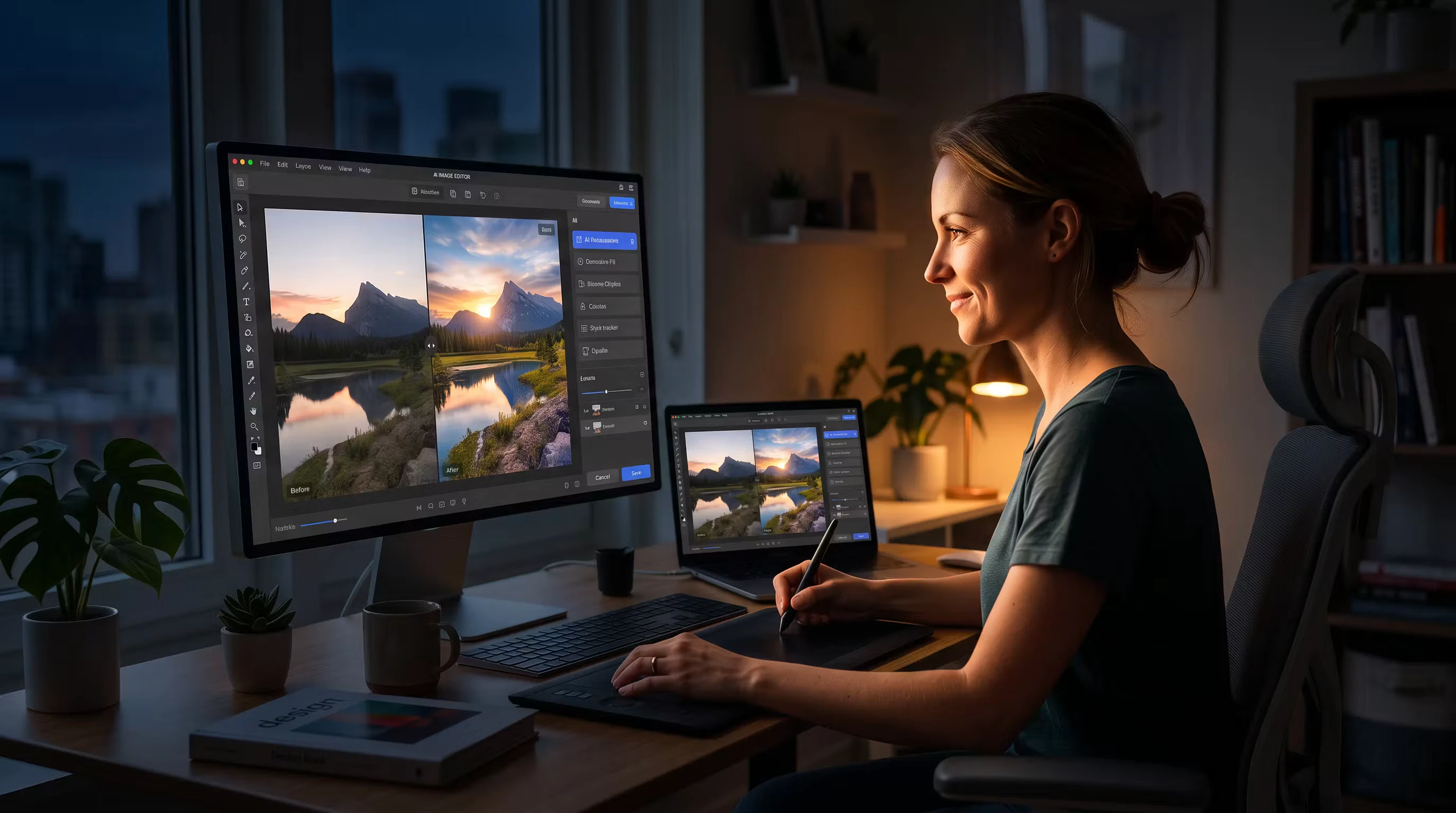
Creating faceless content is easier than ever with AI-powered tools that can handle everything from visuals to voice to on-screen identity. Whether you’re building a fully anonymous channel or developing a recognizable digital brand, the right mix of creative assets and AI tools can help you produce unique, quality content.
AI voice generators: Speak without revealing yourself
AI voice generators, including text-to-speech and speech-to-speech tools, have become essential for faceless creators. Instead of recording your own voice, you can turn scripts into professional-quality narration in minutes, maintain privacy, and create consistent voiceovers across platforms.
This is especially useful for YouTube automation channels, TikTok explainers, tutorials, or multilingual content. With Artlist’s AI voiceover generator, for example, you can quickly create natural-sounding voiceovers designed specifically for video creators.
AI image and video generators: Build content without cameras
Create visuals, B-roll, thumbnails, animations, and even full video sequences without filming from scratch by using AI image generators and AI video tools. Combined with stock footage, royalty-free music, sound effects, and video templates, these tools streamline your production, helping you scale faster, stay on-brand, and create consistently without ever filming yourself!
AI avatars: The next evolution of faceless marketing
AI avatars are one of the most effective tools in faceless digital marketing. In simple terms, they’re digital humans or branded characters that can present your content. Alternatively, you can create a character to co-star in your videos.
AI avatars offer a consistent “face” for your brand without filming. They help viewers connect with your content, making it personal and recognizable while keeping you anonymous (unless they’re the co-star).
Take Lu do Magalu, the world’s biggest AI influencer, with over 7 million Instagram followers. Created by Brazilian retail giant Magazine Luiza, Lu started out explaining tech products online and evolved into a full-blown digital celebrity. In many ways, she proves faceless content can go way beyond anonymous product promotion. She’s become the face of a brand without being a real person at all.
Wrapping up
Is the future of social media faceless? If you look at what’s trending, to a degree, yes, it is. Either that, or a lot of those “faces” you see aren’t humans anymore. There are enormous benefits to both creators and brands in pursuing faceless marketing campaigns. It makes sense for creators to produce that kind of content and for brands to use it.
However, marketing isn’t a one-size-fits-all operation. It’s a crafted campaign that meets different audiences and consumers where they are. Just as influencer culture hasn’t disappeared, faceless content is unlikely to either. Instead, with AI voices, digital avatars, and new creative tools, it’s continuing to evolve.
For some, faceless content will always be about privacy and staying behind the scenes, and that is a huge benefit in itself. But in 2026, it’s also becoming a serious performance strategy. Digiday recently reported that faceless creator network AffiliateNetwork.com grew from 5,000 members to 21,000 in just 3 months. Some top creators are earning $30,000 to $40,000 a month through brand deals alone, without ever showing their face on camera.
Whether it’s AI voiceover videos, automated niche accounts, or digital brand characters, faceless content is no longer just anonymous posting — for many, it’s becoming a highly creative, highly profitable way to build modern media businesses.
For faceless content creators, the trend will continue for as long as they enjoy the benefits of it. Many might value their privacy and less pressured environment, which will always be their preferred medium. Others might choose to remain anonymous but sell their account, as Daquan did. Or like Mrs Hinch, they might decide that being anonymous is no longer preferable and revealing themselves is the best path. As a creator, what’s important is to be able to spot the trends and respond to them. For the moment, that means knowing how to create eye-catching anonymous content that resonates with audiences.