How to turn up the action with thrilling stunts

Highlights
Table of contents
Action-packed stunts are thrilling to watch and help drive a story, but the question is, how far would you go to get the ultimate action scene? We sat down with Anzhelika Libkind from the Artlist Original Footage team and 3 directors who regularly incorporate stunts in their productions to break down some gripping stunts and give you some insider tips for adding stunts to your next production. Read on and watch the full video featuring Spencer Frost, Brad Day, and Lafic and learn more about how AI tools can enhance your stunt game.
A brief history of stunts
Stunts are as old as the film industry itself. It all began in the 1920s when films were black, white, and silent. Slapstick comedy and action-packed scenes were the only way to keep people engaged, which is why many Hollywood actors were also stunt folk, like Buster Keaton, for example. In the 1928 film Steamboat Bill, Jr, the facade of a house fell on top of the actor, who was carefully positioned under a small window to avoid impact. The stunt went to plan, Buster emerged unscathed, and that launched his career as one of the world’s first stuntmen. From then on, it became commonplace to see actors run on top of trains, jump from a burning building, or hang upside down over a waterfall.
Today, it’s still common for actors to do their own stunts, with famous examples including Jackie Chan, Keanu Reeves, Jason Statham, and Tom Cruise. However, stunts aren’t just for films with huge budgets.
Let’s take a look at how stunts increase engagement, lead to viral content, and make your film more memorable — all without breaking the bank.
The benefits of a good stunt
A stunt is any physical action that carries a degree of risk or requires a special skill to perform safely. They aren’t just about danger – they’re about creating compelling action that drives a story forward.
Here at Artlist, we’re big fans of stunts. For one of our $100K Fund commercial, we made an actor fly through the air above a bus, and we orchestrated a huge fight scene in an abandoned warehouse for our Equal Ground production.
Whether it’s jumping out of an airplane, falling from a height, or escaping a burning building, stunts add more value than entertainment. They help tell a story, drive a plot forward, and develop characters.
A well-executed stunt can convey your character's bravery, desperation, or skill faster than dialog alone ever could, and it’s a great way to show how your character deals with stress. Plus, stunts get an emotional response from your audience, as they can share in the delight of their favorite character emerging unhurt from a dangerous situation or triumphantly defeating an enemy.
Believe it or not, stunts can be executed on a low budget. With the right know-how, planning, and team, you can make a big impact with a modest budget and take your storytelling abilities to the next level.
Creating stunts with AI
Today, filmmakers can use AI to create stunt scenes that used to require large crews, expensive rigs, or dangerous setups. With generative AI, creators can storyboard their most imaginative action sequences alongside complex camera angles and cinematic backdrops, so you can experiment before ever stepping onto a set.
This has opened up a whole world of new creative possibilities for filmmakers, social creators, agencies, and production teams working with limited budgets or tight timelines. You no longer need the money for a helicopter or controlled explosions, because creators can use AI-powered visuals to simulate high-impact moments from the comfort of a home studio.
AI is making stunt production way more accessible for creators without huge budgets. Using platforms like Artlist, you can quickly build moodboards, storyboards, visuals, and motion concepts before filming anything. AI tools also help test ideas, generate environments, and experiment with edits or effects, making it easier to plan ambitious shoots and cinematic moments without a massive production team.
Creators can use AI video generation, voiceovers, and editing tools to bring stunt concepts to life. AI image and video generators and make it easier to pre-visualize cinematic moments, test ambitious concepts, and create high-impact content all from the comfort of home.
Who benefits from AI stunt creation
AI-assisted stunt creation is especially valuable for:
- Independent filmmakers working with smaller budgets
- Commercial directors pitching ambitious concepts
- Music video creators looking for viral moments
- Social content creators producing fast-paced cinematic reels
- Agencies creating high-production-value campaigns
- Previsualization teams testing risky or expensive ideas
- Editors and motion designers enhancing practical stunt footage
The hybrid approach: combining real stunts with AI
These days, productions often combine practical stunt work with AI-enhanced visuals. Real stunts bring physical realism, authentic movement, and emotional tension, while AI brings the wow factor: crazy environments, effects, and impossible camera shots.
For example, you could film a motorcycle drift in a parking lot and then use AI tools to transform the environment into a futuristic city chase. Or you could capture a real fight sequence and use AI-generated elements to add debris, weather, explosions, or dramatic backgrounds.
This hybrid workflow is often cheaper, safer, and less resource-intensive than executing every element in real-time. It also gives creators more flexibility when working with smaller crews and tight schedules.
When should you use AI vs practical stunts?
Practical stunts work best when:
- Physical realism is essential
- Actor performance and interaction matter
- You need authentic movement or contact
- The stunt can be executed safely and affordably
AI-generated stunts work best when:
- The concept is dangerous or expensive
- You want to create impossible environments or action
- You’re pitching ideas before production
- You need fast-turnaround content
- You want to scale cinematic production value without scaling the budget
In many cases, combining both approaches delivers the strongest result.
A filmmaker's perspective
We caught up with three filmmakers who regularly incorporate stunts into their work to find out how they navigate the world of stunts and their top tips for the Artlist community.
Spencer Frost is a filmmaker from Sydney who specializes in travel, adventure, and underwater cinematography. He directed the “Underwater Love” production, in which two professional dancers performed a routine underwater. Spencer says safety was his number one priority when organizing this stunt, which is why he hired a dedicated team to ensure the process went smoothly.
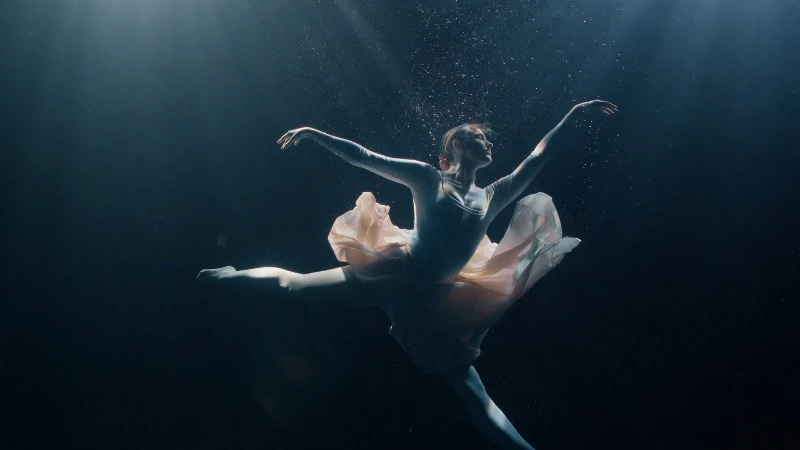
“If you’re a cinematographer, DOP, or director, you’re focusing on the production and shots and not the external elements that might not be safe,” Spencer says. "So it’s good to have someone else oversee those elements.”
Underwater stunts are a unique kind of challenge. “We had to find a swimming pool that was deep enough to do all these crazy actions that we pre-planned,” Spencer says.
He wanted the space to feel expansive and infinite, so he filmed in an eight-meter-deep pool with two professionally trained freedivers. “We got them to do about 80 individual dives during the day,” he says.
As you can see, stunts aren’t just about danger. They’re about creating believable, visually compelling action that serves the story, and what looks dangerous on screen is often safe when properly executed by trained professionals.
Brad Day directed our Equal Ground fight scene. He cast a professional stunt coordinator to lead the scene and hired a safety coordinator to make sure everyone stayed safe while ensuring the fistfights looked believable. “Especially with the face hits, we had to think about how the camera was going to move so your eyes weren’t on the fact that they aren’t actually making contact with the face,” Brad says.
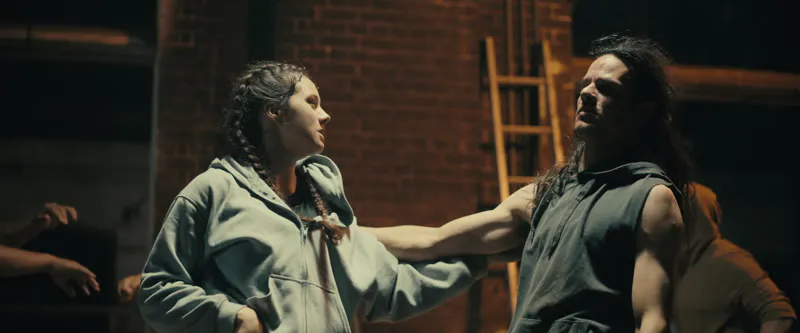
To start, they filmed the scene wide, made sure it looked great from that angle and then coordinated the close-ups based on that. The entire scene took seven hours to rehearse and twelve hours to shoot.
Brad says that it’s important to pick a great location first and build the stunt based on that. “We did a river crossing jump for a Hot Wheels commercial a few years ago,” he says. “That was a very narrow landing, and took a lot of preparation to make sure everyone was in line.”
They got the shot on the first take because they’d prepared so well, and he says it’s always best to keep the takes as minimal as possible because it makes the risks low.
“Put GoPros in crazy places and put your cheap cameras in vulnerable spots, and the shots will look better and better the closer they are to danger,” says Brad.
Another great stunt involved female bikers in South Korea. We worked with Lafic to direct this daredevil production, and he says it all began with collecting inspiration. “We had so many cool references and images,” he says. “For me, the first thing was equipment and environments. Let’s say there’s a biker who can ride really fast, but the problem is how are you going to capture that image?”
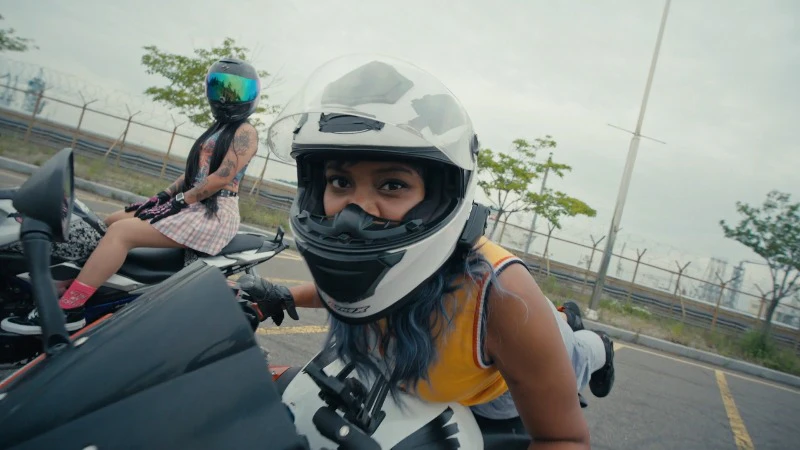
He worked with a team of highly skilled cameramen to capture the action at the same speed the women were driving, resulting in a high-quality, breath-taking video that viewers won’t forget in a hurry.
Hierarchy of a stunt team
Typically, stunt teams include a stunt coordinator who oversees the entire operation, stunt performers who execute the actions and skills, and a stunt rigger who manages complex and technical stunts.
Dan Park, who also worked on the female biker production, says the typical cost for a stunt person is $1000 per day, and a stunt coordinator charges around $1250.
“One of the most important things you can do when practicing stunts is rehearsals,” Dan says. “If you’re going to do stunts, practice, practice, practice before the big day.”
AI is changing this setup by taking a lot of the early planning and pre-vis work into digital tools. That means crews can test ideas, reduce risks and refine stunts long before they get to set, which can save time and money. Stunts are now much safer and more affordable since the rise of AI.
Dream big with AI-powered production
Creating impressive stunts doesn’t need to break the bank, especially if you focus on your camera work. Fast whip pans help simulate hits during fight scenes, and you can use clever angles when filming a jump or fall to make small distances seem bigger.
For example, one recent Artlist stunt involved professional skateboarders riding through a city while fire sparked out of their boards. This didn’t cost much money, but it was visually stunning.
The editing process is also an important factor. Quick cuts can increase the perceived speed and intensity of the action, and strategic use of slow motion will emphasize the difficulty and skill that goes into each stunt. Implying danger through reaction shots in the aftermath of a stunt can drive the plot forward as much as the stunt itself.
And don’t underestimate the power of sound design. The right sound effects make a huge impact on the effectiveness of your stunt on film.
Using AI in pre-production changes how you think about budget because you can test ideas digitally before spending money. It shifts the spend toward planning and iteration, meaning fewer expensive mistakes and more control over what actually gets filmed.
One of the major advantages of AI-assisted filmmaking is creative freedom. Instead of scaling ideas down because of budget, location, safety concerns, or logistics, creators can now think big from the beginning. Artlist’s AI tools help transform ambitious stunt-style concepts into achievable productions with:
- Text-to-video — generate action scenes from prompts
- Image-to-video — animate storyboard frames or stills into moving shots
- Cinematic shot control — define camera angles, movement, pacing, framing
- Character & location generation — create digital performers or environments
- AI-assisted previs/storyboarding — prototype dangerous or expensive stunt concepts before filming
Want a high-speed chase through a city at night, a fight on a moving train, or a surreal underwater sequence? With AI tools, creators can quickly sketch and test ideas without blockbuster budgets. Combined with Artlist’s AI Toolkit, you can move from concept to final delivery with fewer production barriers.
Prompt: A stunt performer falling backward through glass in slow motion, dramatic action film aesthetic.
Other creative ways AI can support stunt productions
- Previsualize dangerous scenes before filming
- Generate concept art and pitch decks for clients
- Create VFX-heavy moments without massive post-production teams
- Extend practical sets into larger cinematic worlds
- Rapidly test multiple creative directions
- Enhance social-first content with blockbuster aesthetics
- Create action-driven ads and trailers faster
- Fill production gaps when time, weather, or logistics fail
Managing your budget
Creating impressive stunts doesn’t need to break the bank, especially if you focus on your camera work. Fast whip pans help simulate hits during fight scenes, and you can use clever angles when filming a jump or fall to make small distances seem bigger.
For example, one recent Artlist stunt involved professional skateboarders riding through a city while fire sparked out their boards. This didn't cost much money, but it was visually stunning.
The editing process is also an important factor. Quick cuts can increase the perceived speed and intensity of the action, and strategic use of slow motion will emphasize the difficulty and skill that goes into each stunt. Implying danger through reaction shots in the aftermath of a stunt can drive the plot forward as much as the stunt itself.
And finally, don’t underestimate the power of sound design. The right sound effects make a huge impact on the effectiveness of your stunt on film.
A hybrid future
These days creators don’t need massive Hollywood budgets or dangerous setups to produce show-stopping action. By combining practical stunt techniques with the Artlist AI Toolkit, filmmakers can create cinema-level sequences faster, safer, and with fewer production limitations than ever before.
Creators can use AI to enhance real stunt footage, moodboard, build wild action sequences or stunning environments, opening the door to bolder ideas and unlimited creativity. It’s fair to say the future of stunt filmmaking is hybrid, accessible, and powered by tools that help you go forth to create without limits. Ready to create bigger, bolder action scenes without a blockbuster budget? Sign up for the Artlist AI Toolkit today.