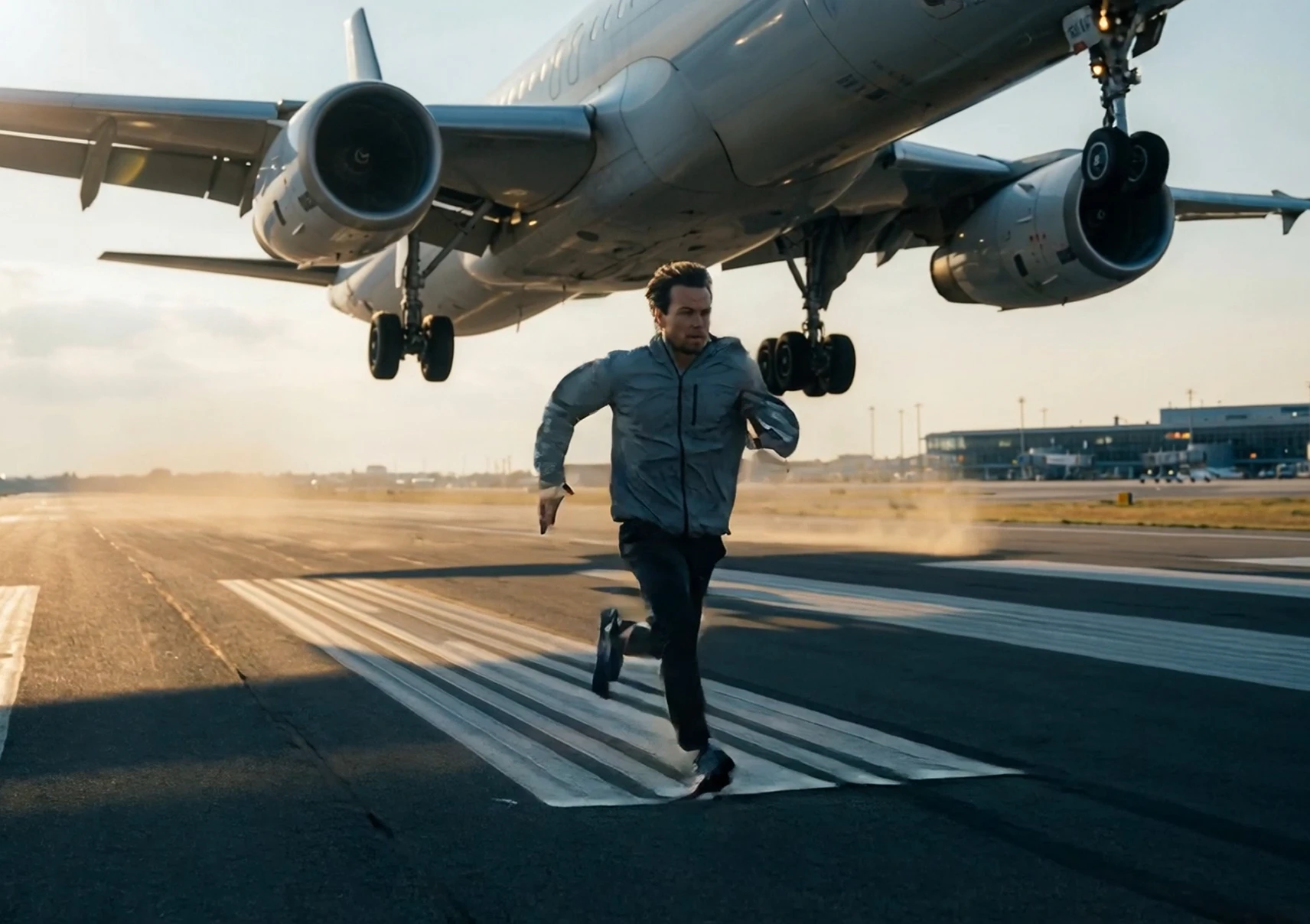
Terrarium: How Artlist is building its first AI-hybrid horror film

Highlights
Since AI entered the filmmaking conversation, the question hovering over every debate has been some version of the same thing: how can AI production tools exist inside a professional, union-compliant Hollywood workflow?
Terrarium is one of the most direct answers yet. Directed by Jason Zada (The Forest) and produced by Christina Lee Storm for Secret Level — the AI-native studio behind productions for Coca-Cola and Google — Terrarium is a hybrid horror feature currently in production. Artlist serves as financier and Executive Producer, with its AI platform powering the production.
Where AI filmmaking gets real
This could be the proof of concept that Hollywood has been waiting for. A real production, with real union oversight, from filmmakers with real track records and credentials worth noting. What makes it different comes down to four things.
1. The director
Jason Zada has spent his career at the intersection of technology and storytelling, most visibly with his Primetime Emmy-winning Take This Lollipop, which placed viewers inside a stalker's perspective using their own Facebook data. That instinct for using technology to create genuine unease, not just novelty, is exactly what AI-hybrid production in horror demands.
2. The producer
Steven Schneider doesn't attach his name to things that aren't going to matter. His track record includes Paranormal Activity, Insidious, and the Shyamalan comeback, consistently identifying what’s next before the industry catches up. Terrarium also reunites him with Jason Zada, with whom he collaborated on The Houses October Built , suggesting this isn't a marriage of convenience. These are filmmakers who already know how to make genres work together.
Schneider describes Zada, "He has a rare ability to make audiences experience something they can't explain, something that stays with them long after the lights come on. With Terrarium, he's pushing into completely new territory. The way he's making this film is unlike anything I've been a part of in twenty years of genre filmmaking."
3. The compliance
The industry’s “don’t ask, don’t tell” era around AI is coming to an end.
As Janice Min, CEO of Ankler Media put it, AI use in Hollywood is often more widespread than people admit publicly. The technology exists, creators are already using it, but doing so openly, responsibly, and within labor frameworks is the real breakthrough.
Terrarium’s production workflow is designed to align with DGA and SAG-AFTRA requirements, including performer-consent protections and union oversight where applicable.
4. The platform
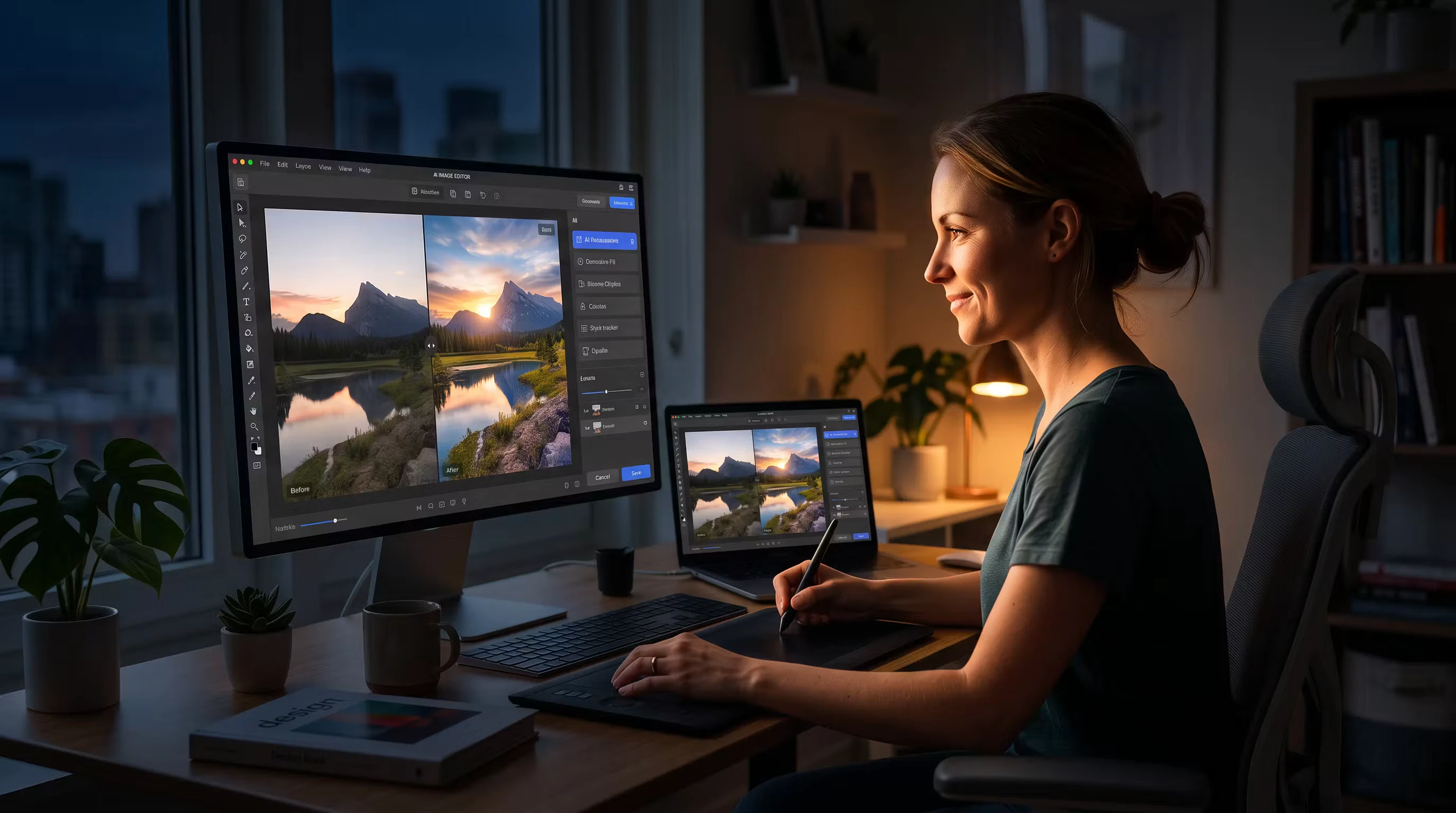
As Executive Producer, Artlist brings a platform built for professional creators into the center of a professional production. The Artlist AI ecosystem gives filmmakers the ability to develop scenes that wouldn’t be possible otherwise, extend or recreate missed shots, enhance existing footage, and create fully generated or heavily augmented out-of-budget scenes. Plus, crucial for testing references at a scale traditional pre-production simply can’t afford. For creators, that means more room to iterate before a shoot becomes expensive.
Why union compliance is the real breakthrough
To understand why that compliance point matters so much, some context helps.
The 2023 SAG-AFTRA strike lasted 118 days and was the longest Hollywood actors’ strike in decades. It was triggered in significant part by studios’ exploration of AI to scan performers’ faces and generate digital performances without consent or compensation. The fear was specific, documented, and existential. The industry was worried that AI could capture a performer’s likeness and reproduce it indefinitely without pay or approval.
The aftermath produced some of the most consequential labor agreements in Hollywood history. SAG-AFTRA established strict frameworks around digital replicas and synthetic performers, requiring explicit informed consent before certain AI applications that replicate or generate a performer’s likeness or voice. The Directors Guild also secured AI-related protections in its own contract language. California later passed legislation that strengthened consent and contract requirements for digital replicas and performer likeness use, including AB 2602 and AB 1836.
Against that backdrop, a film that is genuinely AI-integrated and positioned as compliant with DGA and SAG-AFTRA standards is notable. For studios sitting on the sidelines of AI adoption because of legal and reputational uncertainty, Terrarium offers a model of a production that will operate inside those guardrails.
What this means for studios, producers, and creators
The implications ripple outward in several directions.
For studios, the most immediate signal is permission. Major studios have been cautious about adopting AI production tools not just for creative reasons, but because of the reputational and contractual risks of being seen to undermine union agreements. A high-profile, fully compliant production from credible filmmakers gives them a reference point to say "we are operating the way Terrarium operates" rather than navigating ambiguous territory alone.
For independent and mid-tier producers, the signal is different but equally important: the tools are accessible, the compliance path exists, and the creative upside is real. AI-hybrid workflows are not exclusively for studios with the legal infrastructure to negotiate bespoke AI agreements. They can be built into productions at multiple budget levels, provided the necessary consent and contractual safeguards are in place.
For talent — actors, directors, writers, and crews — Terrarium represents something they have been asking for since the strikes: evidence that AI’s role in production can be defined and subject to the same professional standards as every other element of filmmaking.
The creative advantage of AI in filmmaking
Director Jason Zada's approach to Terrarium is a good indication of what that ambition looks like in practice. The Artlist AI Toolkit and Artlist Studio will be used to make the same creative decisions as traditional filmmaking, but faster, with more options on the table before they become too expensive.
For genre filmmaking specifically, where atmosphere and world-building are everything, that expanded creative range matters. A horror film lives or dies on the specificity of its dread, and the ability to find that specificity earlier, cheaper, and with more iteration can change what the film can be.
As Artlist Co-Founder and Co-CEO Ira Belsky puts it: “This partnership is an incredible milestone not only for Artlist, but for the future of filmmaking itself. Terrarium is proof that AI can enhance the creative process in ways that empower artists, directors, designers, and storytellers to dream bigger and execute at an entirely new level. This is about expanding creative possibilities and not replacing human imagination.”
What comes next
The question of whether AI and Hollywood can coexist has been theoretical long enough. Terrarium is where the next generation of AI-hybrid productions begins to take shape.
For creators and studios ready to explore what that looks like inside a professional workflow, the tools are already being stress-tested on one of the year’s most closely watched productions.
To start building with an AI-hybrid workflow, explore Artlist Studio or the Artlist AI Toolkit.